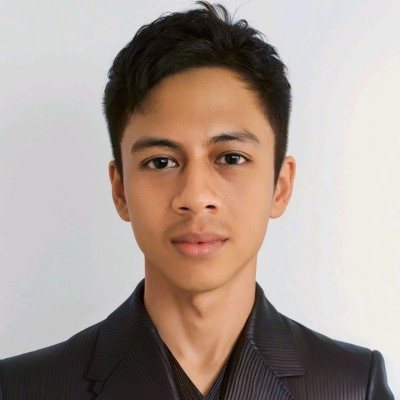
Habibul Rahman QalbiHabibul R. QalbiAI + Backend Engineer

I make AI systems cheaper, faster and more accurate in production.

I'm Habi, an AI + Backend Engineer with 4+ years of Python. As AI Engineer at Growise (Taipei, remote), I build LLM agents and RAG services with FastAPI, then measure them against the baseline.

  • Remote worldwide · UTC+7
  • Open to relocate: NZ · AU · SG · MY · TW · JP · US
  • English · Indonesian

Figure 1. What my changes did, measured

Operating costAI services vs a baseline agentup to−70%
Response timesame baselineup to4× faster
Reasoning accuracyRAG retrieval vs the earlier versionabout+60%
Up-to figures from production work at Growise. Details in the Applied AI Services and RAG modules chapters below.

Selected work

Production AI and backend systems, each with what I built and what changed.

Descriptions use publicly available information. Diagrams are simplified, generic views, not internal designs. Source code, prompts, data and client information stay confidential.

TAM AI

Growise · 2024 – present · AI + Backend

An AI go-to-market platform for B2B export sales teams: describe a target market in plain language, and AI agents research companies, decision-makers and buying signals across multiple data sources.

  • Agent architecture: multi-step reasoning, tool calling, structured outputs
  • Task management and infrastructure decisions
Agentic AIPythonFastAPILLMs

Figure 2. How TAM AI works (simplified, public view)

  1. Plain-language market brief
  2. AI agent plans the research
  3. Queries data sources & tools
  4. Cross-checks & structures results
  5. Verified list + signal monitoring
Read the case study

The product

B2B export sales teams spend hours finding which overseas companies buy their product, who the decision-maker is, and whether an email actually works. TAM AI lets a user describe a target market in plain language; AI agents then research it across a global company database, US customs trade records (by HS code), LinkedIn decision-maker data and government tenders, verify email deliverability, and return a structured, exportable list that can be monitored for new buying signals.

My role

  • Agent architecture: multi-step reasoning, task decomposition, dynamic tool calling and structured outputs.
  • Task management and infrastructure decisions for the AI services.

Engineering focus across my Growise role

  • Reliability: prompting, context engineering, retrieval, tool selection, error recovery and hallucination reduction.
  • Cost & speed: token usage, model selection, context size, caching and tool routing.
  • Backend: asynchronous processing, streaming, concurrency, observability and resilience.

Multi-LLM RAG Modules

Growise · 2023 – present · AI + Backend

Containerized, reusable Retrieval-Augmented Generation modules with pluggable LLMs and embedding models, shared across product domains, without ever mixing data between users.

Up to 50% higher response accuracy vs generic prompts, from task-specific prompt design

RAGRerankingVoyageAIPineconeMongoDB

Figure 3. The retrieval pipeline and what re-engineering changed

  1. Documents
  2. Chunk & embed
  3. Per-user vector index
  4. Retrieve & rerank
  5. LLM answer with context
Retrieval latencyvector-indexing optimizationabout−30%
Reasoning accuracyembeddings, reranker, data cleanupabout+60%

Each user gets an isolated index, so one customer's data can never reach another's answers.

Read the case study

The problem

Several AI products needed to answer questions over customer-specific data, with LLMs and embedding models tailored per client, and without ever mixing data between users.

Results

  • ~30% lower retrieval latency vs. my first version, from vector-indexing optimization
  • ~60% higher reasoning accuracy vs. the unoptimized version, from the retrieval re-engineering plus context, prompt and inference-setting optimization
  • Up to 50% higher response accuracy vs. generic prompts, using task-specific prompt design

What I built

  • Containerized, reusable RAG modules with pluggable LLMs and embedding models, reused across application domains.
  • Isolated, user-specific index pipelines to prevent cross-user data leakage and data mismatch.
  • Integrations with Pinecone, ChromaDB and MongoDB.
  • Later re-engineered the retrieval layer: moved to Voyage AI embeddings, added a reranker, and cleaned, de-duplicated, merged and canonicalized the stored data so it is richer and unique.
PythonLlamaIndexLangChainVoyageAIRerankingPineconeChromaDBMongoDBDocker

Applied AI Services

Growise · 2023 – present · AI + Backend

Microservice-based AI services, tailored per client, for enterprise customers including Advantech.

Up to 70% lower operating cost and up to 4× faster than a baseline tool-calling agent

  • Semantic, prompt and tool-output caching; data canonicalization; context & memory management
  • Safety layers: PII scrubbing, prompt-injection prevention, moderation middleware
OpenAIAnthropicGoogle GenAIFastAPI

Figure 4. Services delivered

Document generationAgentic, automated reports and content
AI assistantsChatbots for engagement and support
TranscriptionSpeech-to-text and semantic audio processing
Image searchLLM-powered classification and retrieval of visual data
Vector dataOptimized vector handling for RAG pipelines
Read the case study

What I did

  • Designed and shipped the services as modular Python microservices using multiple LLMs and embedding models.
  • Optimized prompts, retrieval and service logic, and brought in new LLM techniques as they matured.
  • Cut cost and latency with data canonicalization, semantic caching, LLM prompt-cache management, tool-output caching, and context & memory management.
  • Added safety layers: PII / data scrubbing, prompt-injection prevention and moderation middleware.

Results

  • Up to 70% lower operating cost vs. a baseline tool-calling agent
  • Up to 4× faster vs. the same baseline
  • 2× faster builds after reworking CI/CD
PythonFastAPIOpenAIAnthropicGoogle GenAIVoyageAI

IoT Platform & Site Monitoring

PT Mandiri International Technology · 2023 – 2024 · Backend + Full Stack

Customer-facing web apps, a cross-platform mobile app, and the Django backend that IoT devices and a site-monitoring system talk to. I owned it end to end, from requirements to deployment.

100+ concurrent requests handled after ORM and query tuning

DjangoNext.jsMQTTPostgreSQL

Figure 5. IoT pipeline before and after

Pipeline performancevs a standard MQTT pipeline+50%
Device bandwidthmulti-device connection routing−70%
Read the case study

How it works (simplified)

  1. Devices (ESP32, Arduino, Orange Pi)
  2. HTTP & MQTT
  3. Django REST + Celery workers
  4. PostgreSQL · MongoDB · Redis · RabbitMQ
  5. Web & mobile apps

The work

I owned projects end to end, from requirement gathering with the project director to deployment: customer-facing websites, a cross-platform mobile app, and the backend that IoT devices and a site-monitoring system talk to.

Results

  • 50% higher IoT pipeline performance vs. a standard MQTT pipeline, through parallel input-stream management
  • 70% lower device bandwidth through multi-device connection routing and throughput optimizations
  • Site monitoring: added authenticated data reporting (single-board computers previously sent data straight to the server without auth) and more reliable logging
  • 100+ concurrent requests handled after ORM and query tuning, more resilient to DDoS-like traffic
DjangoDRFCeleryReactNext.jsRTK QueryMQTTC++

More work

AI Workflow

AI automation that chains tasks, tools and content generation into repeatable, multi-step workflows.

Growise · 2024 – present

How it works (simplified, generic view)

  1. Goal / trigger
  2. Break into steps
  3. Each step calls an LLM or tool
  4. Validate structured output
  5. Result / next step

The product

Growise Workflow is an AI automation tool that sequences tasks and generates content, so business teams can turn repetitive, multi-step work into a reusable workflow instead of prompting a chatbot by hand every time.

My role

  • Task decomposition, dynamic tool calling and workflow orchestration for multi-step AI tasks.
  • Choosing and routing between LLM providers to balance output quality, latency and cost.
  • Structured outputs so each step's result is predictable enough to feed the next one.
PythonFastAPIMulti-LLMOrchestrationStructured outputs

Scraper AI

No-code web data extraction, plus the scraping and document parsing that feed AI agents with clean, structured data.

Growise · 2024 – present

How it works (simplified, generic view)

  1. URL / site
  2. Crawl pages (browser automation)
  3. Parse HTML & PDFs
  4. Clean, LLM-ready text / fields
  5. Agent or export

The product

Growise's Scraper lets non-technical users extract data from websites without writing code. The same need shows up inside AI agents: they need clean, structured content from web pages and documents before they can reason over it.

My role

  • Researched and compared crawling and parsing approaches for full-site coverage including PDFs, weighing quality against architectural complexity.
  • Integrated web scraping and Playwright-based browser automation into agent workflows.
PythonPlaywrightWeb scrapingPDF parsingData pipelines

3DVT: Ultrasound Vein Segmentation

Healthcare AI research prototype: segments deep veins from ultrasound images and shows them in interactive 3D.

ITS · 2022 – 2023

How it works (simplified)

  1. Ultrasound images
  2. Django API
  3. U-Net segmentation (TensorFlow)
  4. 3D vein model (GLTF)
  5. React + Three.js viewer

The problem

The research team needed a web app to support Deep Vein Thrombosis (DVT) diagnosis: segment veins from ultrasound images automatically and show them in 3D, as part of a blood-clot volume determination system. Research prototype, not a medical device.

What I built

  • The React–Django application and the backend that runs image processing and serves the segmentation model. The U-Net model itself was developed mainly by the research team's AI group; I supported the research.
  • 3D vein visualization with Three.js from GLTF vein models.
  • A custom AI model handler and preloader to cut real-time inference latency.
  • Feb – Mar 2023: replaced legacy auth with JWT, fixed API viewsets and refactored the backend of the IBrain2U platform.
ReactDjangoTensorFlowU-NetThree.jsJWT

Social Media Data Platforms

Full stack features, secure APIs, Celery workers and Airflow pipelines for social-media data products.

LnData · 2022 – 2023

The work

My first role as a software engineer: frontend and backend development for social-media data products, working with multinational teams.

  • CrawlerHub Web API: full stack developer and maintainer (React / Django).
  • IMP6: data pipeline developer (Apache Airflow).
  • Social Risk: backend developer (Django / Celery).

Results

  • 2× the capabilities of a data-visualization tool, with better UX and performance
  • Secure internal and external APIs; deployment servers monitored and security issues resolved
ReactDjangoCeleryApache AirflowRedisSQL

Handwashing Motion Classification (published paper)

A CNN (EfficientNet-B0) that recognizes handwashing steps from a camera feed: 12/12 steps recognized in testing. With video demo.

Jurnal Teknik ITS · 2021

How it works

  1. Handwashing video
  2. Frame extraction
  3. Data augmentation
  4. EfficientNet-B0 classifier
  5. Moving-average smoothing
  6. Labeled output video

The problem

During the COVID-19 pandemic, many people still washed their hands too quickly or skipped steps, and nobody can watch public sinks 24/7. The goal: use a camera and deep learning to recognize each handwashing step and check whether it was done properly.

Demo video

Left: raw input. Right: the predicted handwashing step written on each frame. Watch on YouTube

What I did

  • Cleaned the public Kaggle Hand Wash Dataset (mislabeled and mixed-motion clips) and extended it with my own recordings using a webcam and a DSLR on new backgrounds.
  • Trained a classifier on EfficientNet-B0 with NoisyStudent weights, with augmentation before the base model.
  • Added moving-average smoothing over frame predictions and tuned the window size to reduce flickering labels.
  • Tested robustness against camera field of view, camera angle and sink background.

Results

  • 99% accuracy in the training phase, above 90% on evaluation in under 20 epochs
  • 12/12 handwashing steps recognized in testing, with 2/12 inconsistent predictions
  • 2 s moving-average window gave the best results
  • Limits: a 30° camera angle and unseen backgrounds lowered accuracy, pointing to the need for a more diverse dataset and careful camera placement
PythonTensorFlowEfficientNet-B0Computer visionData augmentation

Habibul Rahman Qalbi, Eko Mulyanto Yuniarno, Reza Fuad Rachmadi. Klasifikasi Gerakan Cuci Tangan Berbasis Convolutional Neural Network (CNN). Jurnal Teknik ITS, 10(2), 2021. Neliti · DOI

Experience

  1. Nov 2023 – Present

    AI Engineer

    Airconcur (Growise) · Taipei, Taiwan · Remote

    Joined as a freelance AI Module Developer; hired full-time in May 2024.

    • Architect and ship agentic and RAG-based AI microservices in Python (FastAPI) with multiple LLMs and embedding models, working directly with C-level leaders.
    • Up to 70% lower cost and 4× faster than a baseline tool-calling agent, through semantic, prompt and tool-output caching, data canonicalization, and context & memory management.
    • Re-engineered the retrieval layer (Voyage AI embeddings, reranking, data cleanup and de-duplication): ~30% lower latency and ~60% higher reasoning accuracy vs. earlier versions.
    • Built containerized, multi-LLM RAG modules with isolated per-user indexes to prevent cross-user data leakage.
    • Added AI safety layers: PII scrubbing, prompt-injection prevention and moderation middleware.
    • Delivered AI services for enterprise customers, including Advantech; 2× faster builds after reworking CI/CD.
  2. May 2023 – May 2024

    Full Stack Developer / Software Engineer

    PT Mandiri International Technology · South Jakarta

    • Owned the full project lifecycle, from requirement gathering to deployment.
    • Built customer-facing web apps (React, Next.js) and a cross-platform mobile app on a Django REST backend.
    • IoT device–backend communication over HTTP and MQTT; tuned ORM and queries for 100+ concurrent requests.
  3. Aug 2022 – Mar 2023

    Full Stack & Backend Developer (Healthcare AI)

    Institut Teknologi Sepuluh Nopember (ITS) · Freelance · Surabaya

    • Built the React–Django app and backend serving the research team's AI model for ultrasound vein segmentation and 3D visualization.
    • Replaced legacy auth with JWT and refactored API viewsets for performance and reliability.
  4. Apr 2022 – Apr 2023

    Full Stack Web Developer

    LnData Inc. · Surabaya

    • React / Django products, secure APIs and Airflow data pipelines for social-media platforms.
    • Managed deployment servers, monitored system load and resolved security issues.
  5. 2017 – 2021

    B.Eng. Computer Engineering

    Institut Teknologi Sepuluh Nopember (ITS) · Surabaya

Skills & stack

AI engineering

LLM features that survive production: agents with tool calling, RAG over your own data, and the evaluation and cost tuning that keep them reliable.

  • Agentic workflows & multi-agent orchestration
  • RAG: embeddings, vector DBs, reranking
  • Token, latency & model-cost optimization
OpenAIAnthropicLangChainLlamaIndexPinecone

Backend engineering

Python services and APIs that are secure, observable and fast under load — the part of the stack I've spent most of my career in.

  • REST APIs & microservices (FastAPI, Django)
  • Async jobs, queues, caching, data pipelines
  • Query tuning, auth (JWT) & CI/CD
PythonFastAPIDjangoPostgreSQLMongoDBRedisDocker

Full stack development

End-to-end delivery, from requirement gathering to deployment: responsive web apps on a solid backend, plus a cross-platform mobile app shipped in production.

  • React / Next.js frontends with TypeScript
  • Redux Toolkit, RTK Query, Tailwind, MUI
  • Owning features across frontend, API & DB
ReactNext.jsTypeScriptTailwind CSSDjango REST

Also worked with

Pydantic AI, Google GenAI, VoyageAI, ChromaDB, Celery, RabbitMQ, Apache Airflow, MinIO, Azure, Django Channels, WebSockets, MQTT, Playwright, Material UI, Three.js, TensorFlow, C++, ESP32 / Arduino.

Open to new stacks

I've moved between Django, FastAPI, React, IoT hardware and LLM tooling as projects needed. I'm happy to pick up whatever your team runs on, such as Node.js, Go, AWS, GCP or Kubernetes.

Ways we can work together

Hiring is what I'm looking for most. I also take on projects, custom AI builds and co-building.

Hire me

For companies

Full-time or contract roles as an AI Engineer, Backend Engineer or Full Stack Developer. Remote for teams anywhere; hybrid / on-site in Indonesia, or relocating abroad.

Discuss a role

Build your project

For project owners

Freelance delivery of backend APIs, web apps and AI features, from requirements and a working prototype to deployment and handover.

Tell me about your project

Custom AI solutions

For businesses

An AI tool built around your data and workflow, such as:

  • Market & competitor research agents
  • Lead research & data enrichment
  • Chatbots over your documents (RAG)
  • Automated reports & documents
  • Web & PDF data extraction
  • Transcription & workflow automation
Request an AI solution

Build something together

For founders & builders

Looking for a technical partner or co-founder for an AI product? I'm open to co-building products, startups and community or open-source projects.

Let's build together

How I run a project

  1. DiscoverUnderstand the problem, users and constraints
  2. PrototypeA quick proof of concept to validate the approach
  3. BuildProduction-grade APIs, UI and AI pipelines
  4. Ship & measureDeploy, monitor, tune cost and quality
  5. Hand overDocs and a clean handover, or continued support

Let's talk about your team.

A role, a project, a custom AI tool or a product idea: send me a short note about what you have in mind and I'll get back to you.

habi6799@gmail.com